How to Repair Water-Damaged Hardwood Floors: A Homeowner’s Guide
Water damage is one of the most challenging issues for hardwood floors. Whether it’s from a leaking appliance, burst pipe, or heavy rain, knowing how to respond quickly can be the difference between a simple repair and a costly replacement. If you’re a homeowner in Downers Grove, IL, here’s a practical guide to recognizing, assessing, and repairing water-damaged hardwood floors.
How do I know if my hardwood floor has water damage?
Some signs of water damage are easy to spot. Look for areas that are darker than the rest of the floor, boards that are cupping (edges higher than the center), crowning (center higher than the edges), buckling (boards lifting from the subfloor), or showing gaps that weren’t there before. You might also notice a musty smell or soft spots underfoot. If you see any of these signs, tackling the issue early reduces the risk of more extensive repairs.
What steps should I take right after discovering water damage?
First, stop the source of the water if possible. Remove any standing water with towels or a wet vac. Open windows and use fans or a dehumidifier to dry the area as much as possible. Avoid walking on affected areas to prevent further damage. Document the damage with photos if you plan to file an insurance claim. Once the area is dry, call a flooring professional to assess the extent of the damage and recommend next steps. For more information about professional repairs, see hardwood floor water damage repair.
Can water-damaged hardwood be saved, or does it need replacing?
It depends on how long the floor was exposed to water and how severe the damage is. Minor cupping or small stains can often be fixed with drying and refinishing. Severely buckled or rotted boards usually need to be replaced. Sometimes, only a few boards are affected and can be swapped out by a professional. A thorough inspection will help determine if repair or full hardwood floor replacement is necessary.
What repair methods are used for water-damaged hardwood floors?
There are several repair methods, depending on the type and extent of damage:
- Drying and dehumidifying: For light moisture, professional-grade fans and dehumidifiers are used to remove water from the wood and subfloor.
- Sanding and refinishing: If the floor is cupped or has surface stains, sanding can level the boards and remove discoloration, followed by refinishing to restore the look. This is often part of hardwood sanding & refinishing.
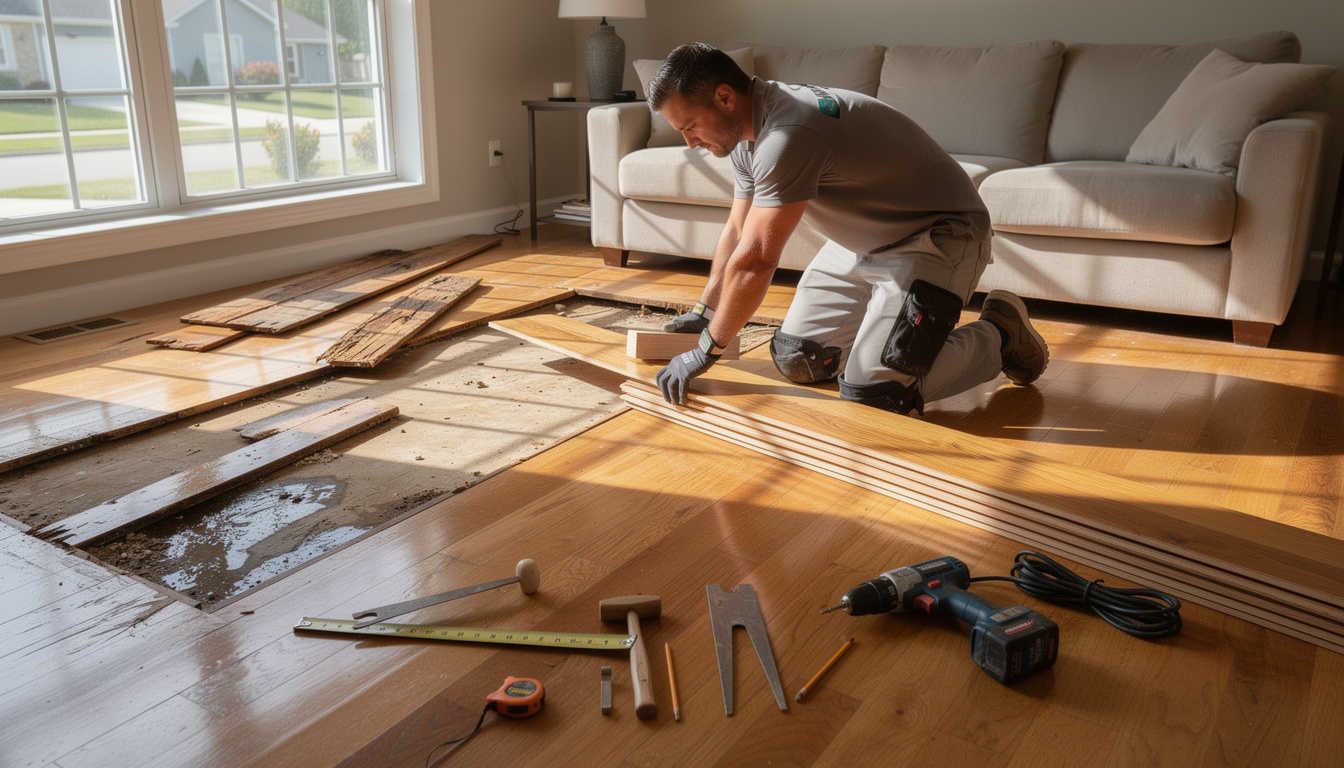
- Board replacement: Severely damaged boards are carefully removed and replaced with new, matching hardwood. Spot repairs are done to blend with existing flooring.
- Subfloor repair: If water reached the subfloor, it may need to be dried, leveled, or even partially rebuilt to ensure a solid base for your new or repaired flooring.
Each method is chosen based on the condition of your floor and the extent of the water intrusion.
How do professionals match new boards to my existing floor?
Matching new boards to old flooring can be tricky, especially if your floor has aged or has a custom stain. Pros will source the same wood species and grade, then sand the new boards to the same thickness as the old ones. Stain color is carefully matched, sometimes using custom mixes, until the new boards blend with the rest. Once installed, the entire surface may be recoated for a seamless finish.
Can I prevent future hardwood floor water damage?
While you can’t prevent every accident, regular maintenance goes a long way. Fix leaks right away, use mats in entryways and under sinks, and keep an eye on humidity levels in your home. In basements or bathrooms, consider more water-resistant flooring options. If you notice squeaks, gaps, or soft spots, have them checked out before water finds its way in. Quick action and routine inspections help keep your hardwood floors looking great for years.
Frequently Asked Questions
How long does it take for hardwood floors to dry after water damage?
Drying time depends on the amount of water and the indoor climate. With proper ventilation and dehumidification, minor spills may dry in a couple of days. Larger leaks or floods can take a week or more. It’s important not to rush sanding or repairs until the wood is fully dry, as working on damp boards can cause further issues.
Will water stains disappear after refinishing?
Many surface stains can be removed by sanding and refinishing. However, deep stains that have penetrated through the finish and into the wood might not come out completely. In those cases, replacing the affected boards is often the best solution for a uniform look.
What if my hardwood floor is still squeaking after repairs?
Squeaks are often caused by loose boards or subfloor issues. If the floor still squeaks after water damage repair, it may be necessary to address the underlying cause, which could involve tightening fasteners, adding shims, or using specialized adhesives. Professional assessment helps identify and fix the source of squeaks.
Can engineered hardwood be repaired after water damage?
Engineered hardwood is sometimes more resistant to moisture than solid wood, but prolonged exposure can still cause swelling or delamination. Minor surface damage can sometimes be sanded and refinished, but extensive damage typically requires board replacement.
If you’re dealing with water-damaged hardwood floors in Downers Grove or the surrounding area, don’t wait to address the problem. The sooner you act, the more likely you are to save your floor. Contact Fabulous Flooring, LLC for a professional assessment and practical solutions tailored to your home’s needs.