
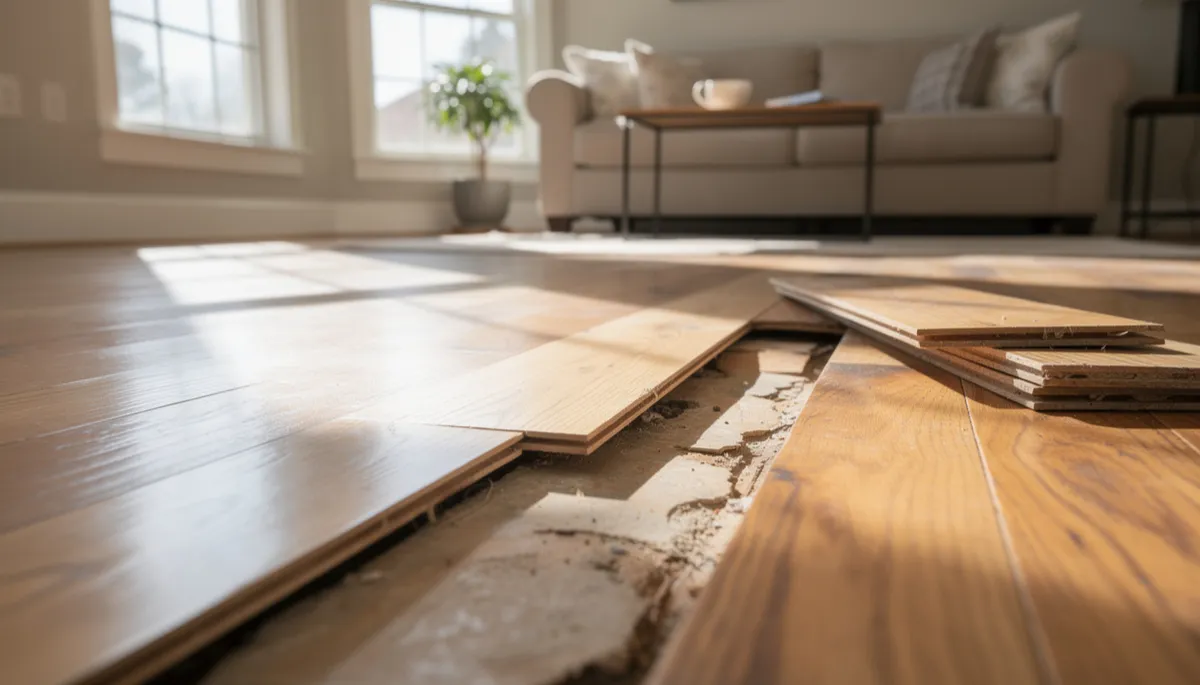
How to Repair Buckled Hardwood Floors After Water Damage
Water and wood don’t mix well. When hardwood flooring is exposed to too much moisture, it can buckle—leaving raised, uneven sections that are tough to ignore and even tougher to walk on. If you’re dealing with buckled hardwood floors in your Downers Grove home, knowing what to do (and what not to do) can make all the difference. Here’s a straightforward guide to help you understand, address, and repair hardwood floor buckling after water exposure.
What causes hardwood floor buckling?
Buckling happens when the boards absorb more moisture than they can handle. This often occurs after leaks, spills, flooding, or high humidity. The wood swells, loses its tight fit, and lifts up from the subfloor. Common sources in homes are leaking appliances, burst pipes, plumbing issues, or water tracked in from outside. Sometimes, a poorly sealed subfloor or missing vapor barrier can make things worse by letting moisture sneak up from below. Understanding the cause is the first step to preventing the problem from happening again after repairs.
How do I know if my floor is buckled or just cupped?
Cupping and buckling are both caused by moisture, but they look different. Cupping is when the edges of the boards are higher than the center, creating a slight "U" shape. It feels wavy underfoot but the boards are still attached to the subfloor. Buckling, on the other hand, is more severe: entire boards or sections lift and separate from the floor, sometimes by an inch or more. If you see or feel raised areas that move when you step on them, that’s buckling, and it needs attention fast.
What should I do first if I notice buckling?
Acting quickly can save your floor. Start by finding and stopping the source of the water—whether it’s a spilled drink, a plumbing leak, or a wet basement. Remove surface water with towels or a wet vac. If the air is humid, set up fans and a dehumidifier to pull moisture out of the room. Open windows if the weather allows. Avoid walking on the buckled area to prevent further damage. If the problem is extensive or you’re unsure of the cause, it’s best to call a professional for an inspection.
Can buckled hardwood floors be repaired, or do they need to be replaced?
It depends on the extent of the damage. If the boards haven’t been wet for long and the buckling is minor, drying the area thoroughly may allow the wood to return to its original position. This is more likely if the subfloor hasn’t been soaked. In many cases, though, the wood will stay warped or loose. When this happens, repairs can involve:
- Removing and replacing damaged boards
- Securing loose boards back to the subfloor
- Addressing any damage to the subfloor itself
- Refinishing the area to match the surrounding floor
For a deeper look at how this process works, see our hardwood floor buckling repair page.
What’s involved in replacing or repairing buckled boards?
Repairs start with removing the affected boards. This is done carefully to avoid damage to the surrounding planks. If the subfloor is wet or moldy, it needs to be dried and cleaned, or sometimes replaced. New boards are then installed, making sure they match the existing floor in grain, color, and finish. Professional installers use precise techniques to ensure the new boards fit tight and sit flat. After installation, the area might need to be sanded and refinished to blend the repair with the rest of the floor. If you need help, our hardwood board replacement service explains how we match boards and finishes for a seamless repair.
How can I prevent hardwood floor buckling in the future?
Prevention comes down to controlling moisture. Here are some practical tips:
- Clean up spills and water quickly
- Use area rugs in entryways and high-traffic areas
- Keep humidity in your home between 35% and 55%
- Check for leaks around appliances, sinks, and windows
- Make sure your home’s vapor barrier is intact
- Consider professional subfloor repair if you notice persistent moisture issues underneath your floor
Staying on top of these basics will help your hardwood flooring last longer and look better.
Frequently Asked Questions
How long does it take for hardwood floors to dry out after water exposure?
Drying time depends on how much water got into the boards and the subfloor. It can take anywhere from a few days to a couple of weeks. Using dehumidifiers, fans, and good ventilation speeds up the process. It’s important to make sure everything is thoroughly dry before making repairs or refinishing.
Is it possible to fix buckled floors myself?
Small issues, like minor cupping, can sometimes be addressed by drying the area. True buckling, where boards lift off the subfloor, usually requires removing and replacing wood, which is best handled by professionals with the right tools and experience. DIY repairs often lead to uneven results or further damage.
Can all types of hardwood be repaired after buckling?
Most solid and engineered hardwoods can be repaired or replaced if damaged by water, but the process and success rate depend on the extent of the damage, the age of the floor, and the type of wood. Some boards may be salvaged, while others need to be replaced entirely to restore the look and integrity of the floor.
Will my floors look the same after repairs?
With proper board matching and refinishing, repairs can be blended in so they’re nearly invisible. Slight differences can sometimes be seen, especially with older floors, but a skilled pro will make the transition as seamless as possible.
If you’re in Downers Grove or the surrounding area and dealing with buckled hardwood floors, don’t wait for further damage. Reach out to our team at Fabulous Flooring, LLC. We’ll assess the problem and guide you through the next steps to get your floors back in shape.